The Secret Behind Smooth Products: A Guide to Industrial Mixing and Milling
- seosearchedges
- Mar 19
- 2 min read

Have you opened a new can of paint and seen how smooth it is? Have you noticed that many liquid products (e.g.: medicines, beauty products, printing inks) are also smooth and have no lumps? The solution to this problem is because of heavy duty industrial machinery. Making a perfectly smooth liquid product is typically completed in 2 phases: 1) Combine the ingredients, 2) Grind the material down to a tiny particle size. Factories use different machines to do both steps. Let’s take a closer look at the machines that accomplish this.
Phase 1: Bringing It All Together With An Agitation Tank
If you plan on creating a cake at home, you will have to combine flour, eggs, and sugar into a bowl and mix them together prior to baking. In factories, however, this mixing process happens in large tanks that use a large machine to mix the ingredients as a complete batter.
This is where the agitator tank manufacturer comes in. Large mixers/agitator tanks are very similar to blenders. They consist of heavy-duty tanks with rotating blades or paddles (the agitators) that are utilized to thoroughly mix various raw or separate types of ingredients together such as liquid solvents and solid powders resulting in one uniform batch of finished manufacturing material. The reliability and quality of an agitator tank is important if the mixed material is lumpy or grouped together, then the rest of the manufacturing operation is fated to suffer.
Phase 2: Going Microscopic With The Use Of The Mills
After the mixing is complete the product that has entered the agitator tank, continues to contain many microscopic particles of solid powder floating in the liquid.
To eliminate these remaining solid powder particles from the product and to ensure that once the product is finished it is smooth enough to feel like silk or to the point where the product can be easily and evenly sprayed from a spray nozzle, those still remaining solid powder particles that are floating in the liquid need to be further reduced in size (wet milling).
How a Bead Mill Works
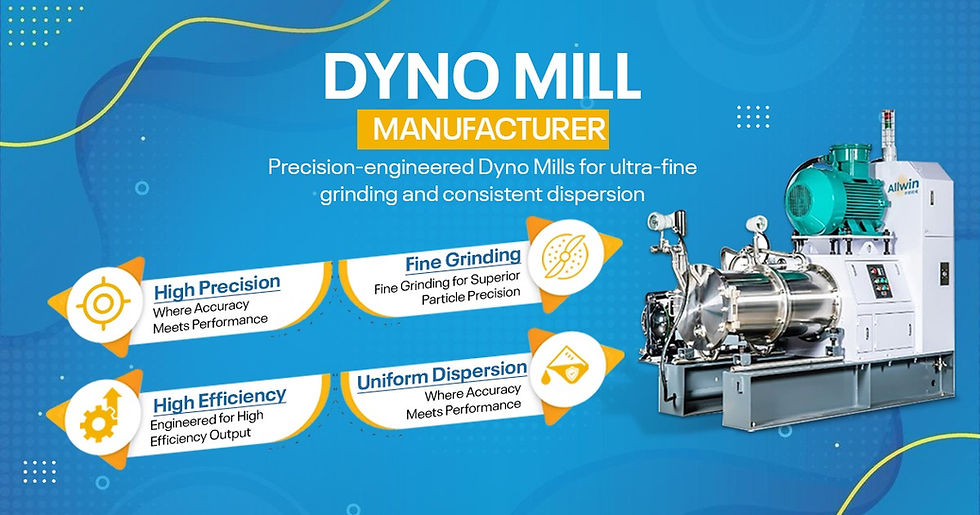
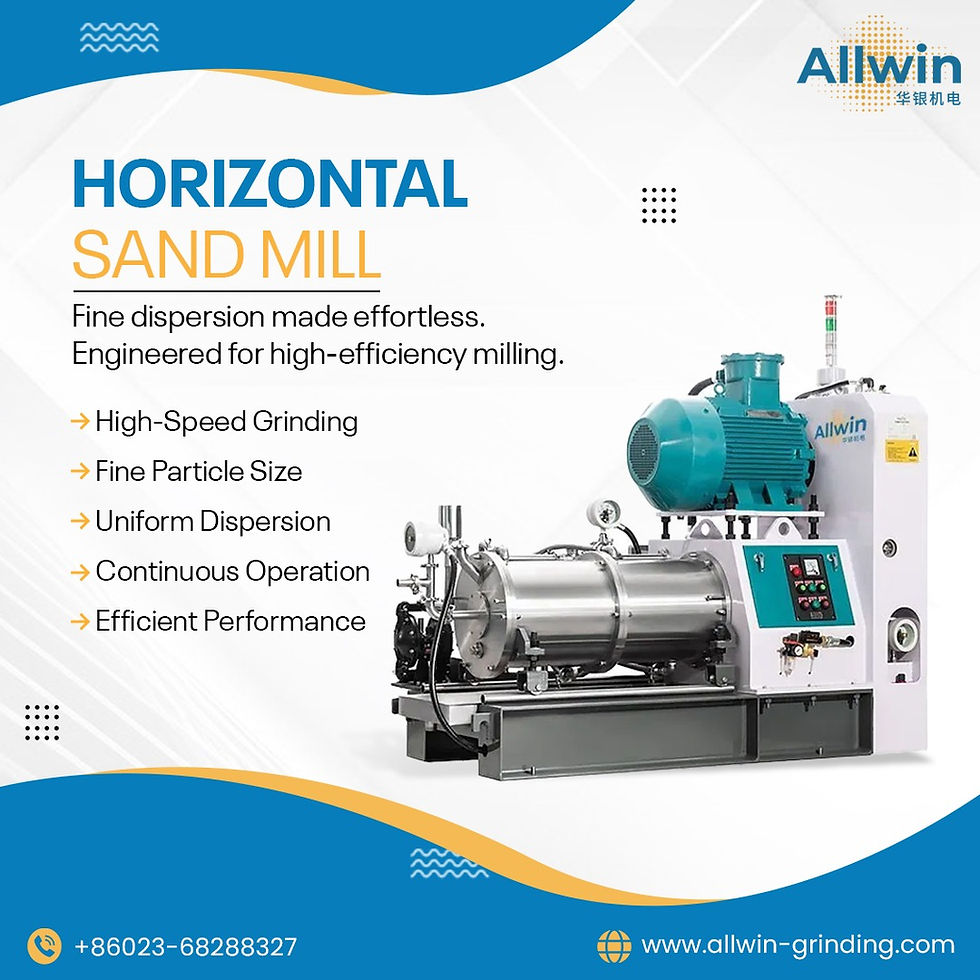
Picture a long cylindrical tube made of metal, filled with a multitude of very small, very hard, spherical beads, whether made from glass or ceramic. Once your mixed liquid enters the tube, an end-mounted rotor spins with a very high degree of rotation. As the rotor spins, all of these small beads create an equal and very violent impact against one another. This violent action breaks up the small solid particles within your mixed liquid down to the microscopic level. After the mixed ingredients have been broken down by impacts among themselves, the mixed ingredients are ejected from the machine as a perfectly smooth liquid material, while all of the beads are retained within the machine and can be reused in the next batch.
Conclusion
The production of high-quality liquid products has many different components; a perfectly created blend in your agitator tank, and the power of your bead or dyno mill manufacturer located at the end of the mixing process. By using correct manufacturers of equipment, manufacturing facilities can ensure that all of the liquid products (paints, inks, lotions) produced are always perfectly smooth and homogeneous.

Comments