The Invisible Magic Behind Smooth Products: Understanding Bead Mills and Mixing Tanks
- seosearchedges
- Apr 2
- 4 min read

When you paint a wall, have you been amazed by how smoothly the colour goes on, how nice and silky your daily sunscreen feels, or how well ink flows from your printer? We seldom think about the methods used to create these items so perfectly smooth and with no lumps.

The secret of creating these items with such perfect, smooth textures is in the manufacturing process. In particular, through the use of a technique commonly known as "wet grinding". The equipment used to create these items is considered industrial-grade, heavy duty. We will discuss the fundamentals of this technology — specifically, how bead mills, dyno mills, and agitator tanks are all used to create our everyday products.
What is a Bead Mill Machine?
To grasp how wet grinding works, it’s important to first comprehend how bead mills operate. If you think about it, if you wanted to turn a block of sugar into granulated sugar only using your hands, that could take forever and wouldn't yield very consistent results. A bead mill does this at an industrial level inside a liquid.
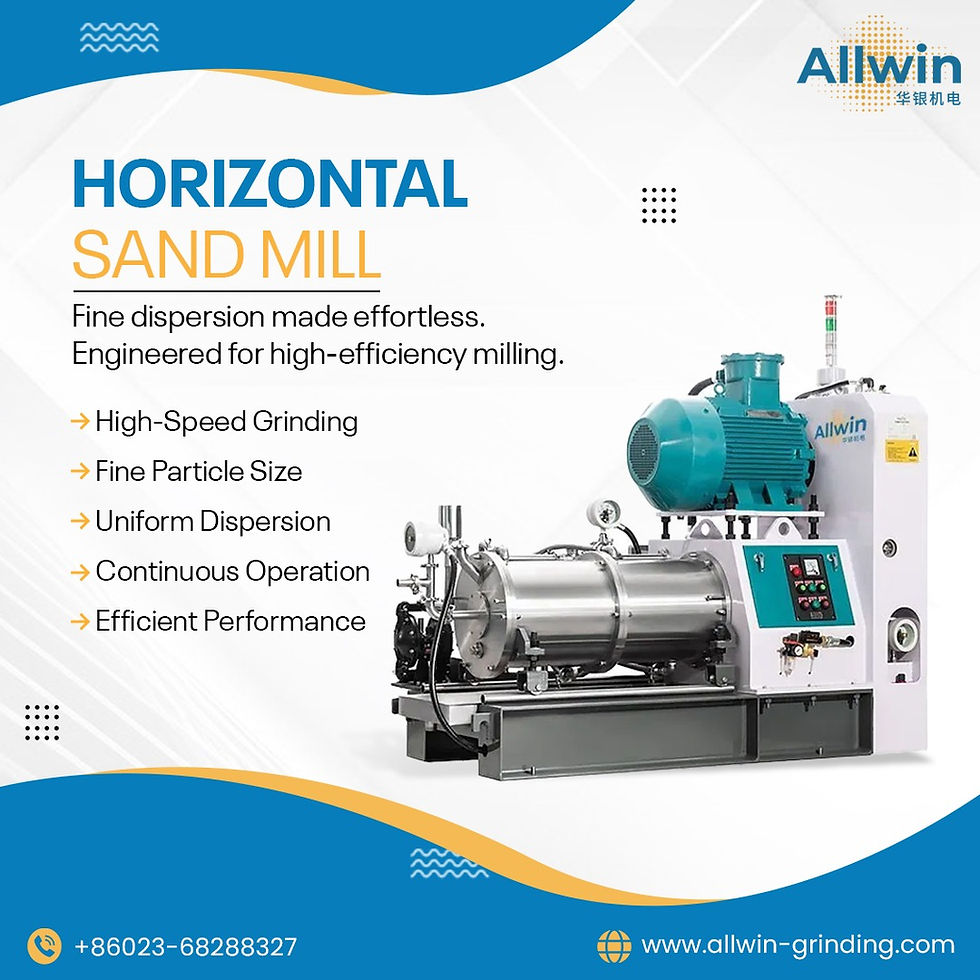
A standard bead mill consists of a grinding chamber filled with thousands of small, very hard beads (usually ceramic, glass, or steel). The rotor spins rapidly, stirring the beads violently within the grinding chamber. While this happens, liquid processed product that contains large particles (chunks of raw material) is continuously pumped through this chamber. The beads collide with one another crushing the solid particles trapped between them.
Because this process is so dependent upon precision and accuracy, factories spend lots of time and money researching potential sources of bead mills before making a purchase decision. A factory that purchases a quality bead mill can achieve their desired end product by grinding all of their raw material down to the exact size that they need while not overheating any of their finished products due to friction from the grinding process.
Understanding the Dyno Mill
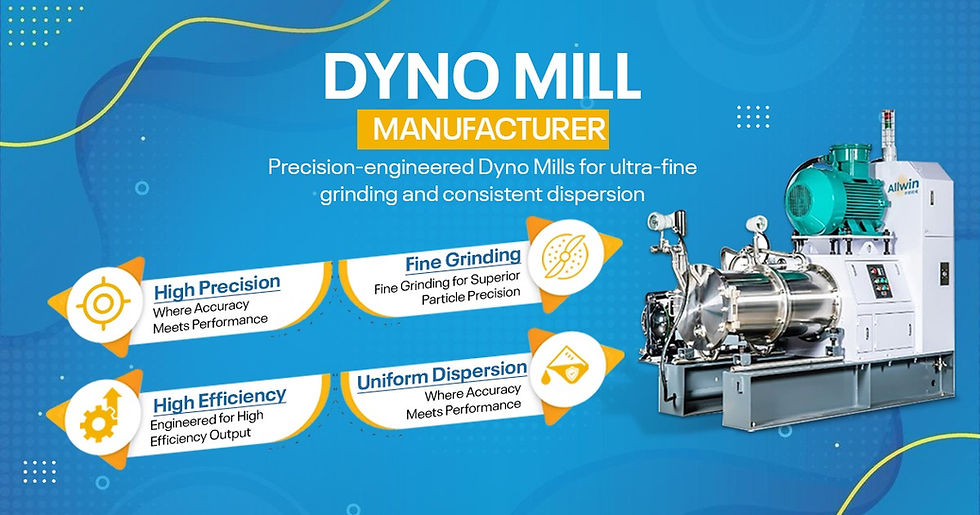
Dyno mills are a specific type of agitator bead mill that have become well known for their ability to grind materials down to nano meter-sized particles. In fact, many industrial companies will use dyno mills in their production processes as they provide safe, enclosed environments to produce high-quality products while also being able to run continuously 24 hours a day, seven days a week. For this reason, finding an experienced dyno mill manufacturer is extremely important in order to avoid downtime or clogging up production lines.
The Crucial First Step: Agitator Tanks
Simply throwing in some dry powder and some liquid into a bead mill will not work; it will cause the machine to jam immediately. The raw materials must first be adequately blended into a thick mixture before starting the grinding.
This is where an agitator tank enters into the picture. An agitator tank is a huge industrial mixer equipped with a strong rotating blade/impeller to mix liquids and solids and to break down the largest clumps of material. An agitator also keeps the solid heavy materials suspended in the liquid to prevent them from sinking to the bottom.
Without a properly manufactured agitation tank, the bead mill will not function correctly. As such, partnering with a reputable agitator tank manufacturer is equally as important as buying the actual grinding machine. A good tank will allow a smooth, uniform flow of materials into the bead mill while protecting the fragile grinding beads.
Selecting the Right Manufacturing Partner
A high degree of expertise is necessary to create this type of heavy machinery. When manufacturers decide to develop a production line, they search for suppliers that have an understanding of the principles of friction, thermal dispersal, and material degradation. The extremely high amount of heat generated by the constant collision between the grinding beads, can render the machinery useless if the cooling jackets do not function properly, ultimately putting at risk entire batches of expensive paint and cosmetic creams.
Some well-established companies within the industrial landscape of wet grinding will also have developed their own version of this technology over a long period of time, such as Allwin Grinding. In this very specialized segment, Allwin has focused primarily on research, development, and production of different types of wet milling machinery, and can be studied by factory operators to gain valuable knowledge in relation to the types of rotors, bead separation and cooling technologies that they will use in their equipment.
Summary
While seldom seen in the spotlight, industrial milling machines are indeed the unsung heroes behind today’s manufacturing. So, the next time you apply a coat of paint, use a smooth cream, or look at the vibrant colours on your printed box, think of the hidden journey those materials took to get here. First they go into a tank for mixing, then they flow through the intense high-speed rotary action of a bead mill or dyno mill and finally result in the finished product that adds colour and convenience to our lives today.

Comments