From the Lab to the Factory: A Simple Guide to Bead Milling
- seosearchedges
- Feb 23
- 3 min read

Have you ever dipped a brush into a can of paint and marvel at how smooth it is? Or applied a high-quality face cream that vanishes into your skin without feeling gritty?
We often take these textures for granted, but achieving that level of smoothness is a major engineering challenge. To get materials that smooth, manufacturers have to grind particles down to microscopic sizes. They don’t use hammers or crushers for this; they use a sophisticated process called "bead milling."
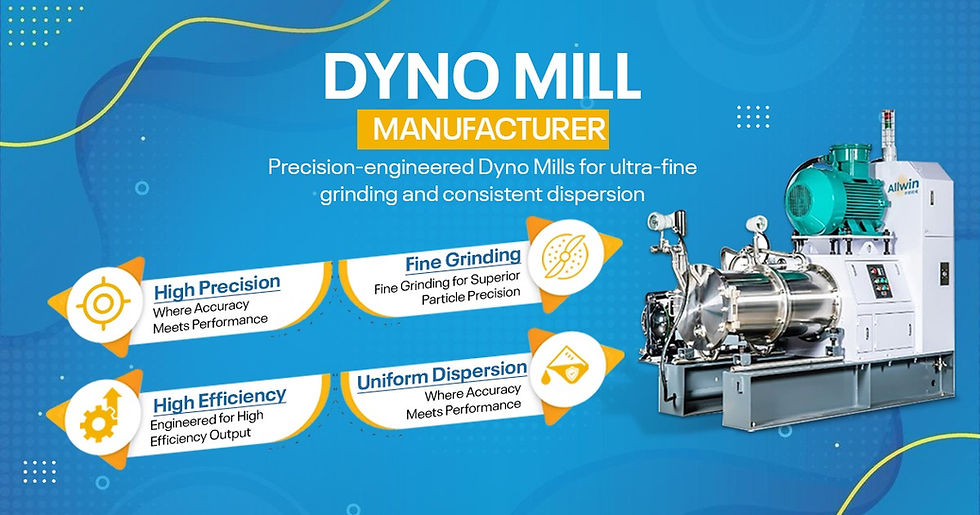
If you are looking to understand how this process works—from the first experiment to mass production—you need to know about three key things: the Laboratory Bead Mills, the full-scale Horizontal Bead Mills, and the role of the Bead Mill Manufacturer.
Step 1: Creating a High-Quality Product is Selecting a Bead Mill Manufacturer
To produce a high quality product, you cannot simply purchase a grinder from your local hardware store. Because of the need for precise milling processes in industrial manufacturing, the selection of a qualified bead mill manufacturer will be the first and foremost factor in producing a high quality product.
The method by which a bead mill operates is by constructing a closed chamber filled with thousands of small and hard beads. As a shaft rotates within the chamber, it causes the beads to collide with and break apart particles of the material until the particles are much smaller than the original size.
It should be noted that each different type of material that is ground has different properties and behaviours. For example, grinding insecticide is not the same as grinding chocolate, which is also not the same as grinding ink. To this end, leading manufacturers in the bead mill industry not only provide machines to their customers but also act as consulting partners who work with their customers to determine the specifications of the right machine, speed, and size beads will produce the desired particle size for a given material. In fact, the bead mill manufacturers become the architectural designers for the machines.
Stage 2: Testing the Recipe Using Lab Bead Mills
Think about when you want to make a new soup recipe. You wouldn’t start off by cooking 500 gallons; instead, you would test the recipe in one small serving to see if it's good before making all that soup.
Using the same thought process, labs will use an experiment to determine what works before they start producing thousands of gallons of paints or inks at the plant level with Laboratory Bead Mills.
These "miniature" versions of full-scale manufacturing plants are small enough to fit on a workbench and can only process small amounts of materials, typically one or two cups at a time.
Lab Bead Mills enable scientists to do trials before they start large-scale production because of the two main reasons for their use:
Cost: Raw Materials Are Expensive. If the formula fails during trials, you won't waste as much raw material.
Quality Assurance: Scientists can adjust the speed and temperature of the tiny machines until the product meets their desired quality assurance level. Once the scientists figure out how to create the desired recipe using the bead mill at the laboratory level, they can easily replicate that process at the plant level for mass production.

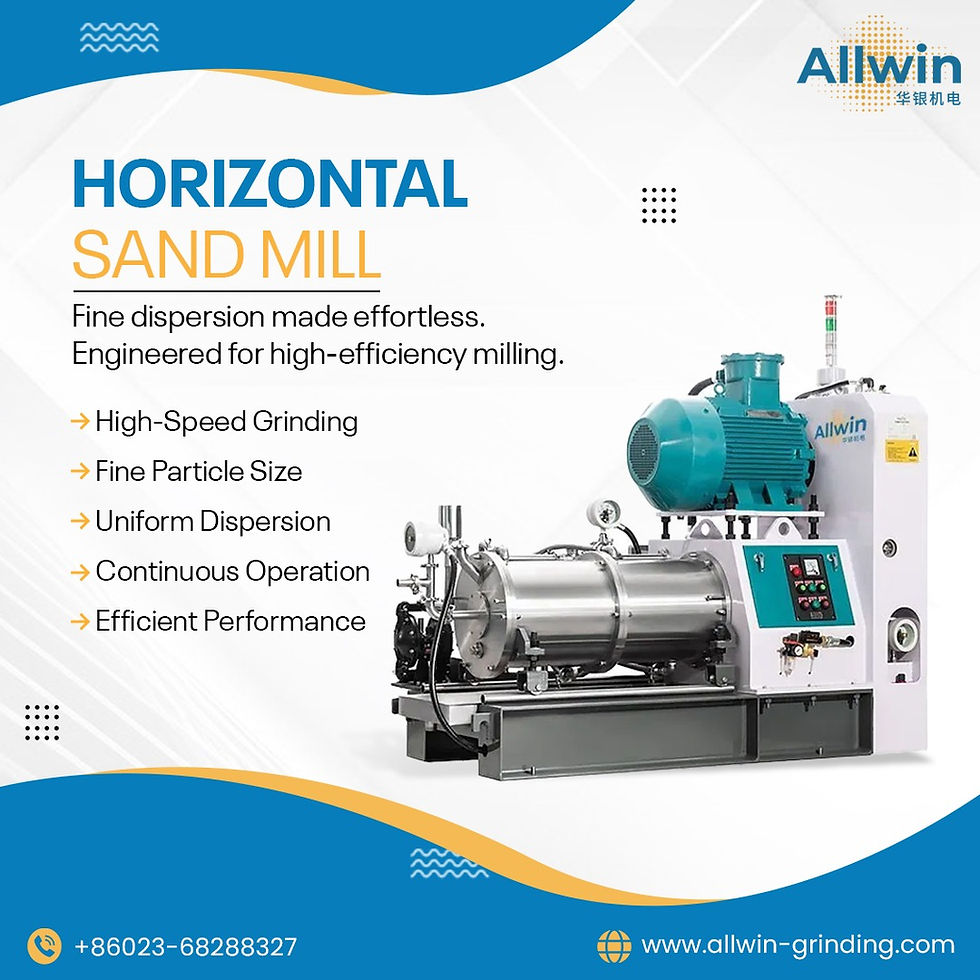
After the recipe is ready and perfected in the lab, it is time to produce enough product to provide the world market. This is where Horizontal Bead Mills come in.
Previously, some mills were built in a vertical position (standing upright) but the design of the vertical mills caused issues with the beads. Because of gravity, the beads would sink to the bottom of the mill creating an uneven grind; causing premature wear of the machine.
To eliminate the issues related to a vertical bead mill, Horizontal Bead Mills use a horizontal design for the grinding chamber. A horizontal chamber allows the beads to be evenly distributed; create a quicker process and allow for long duration (hours/days) processes to occur. Horizontal Bead Mills work as the manufacturing engines for producing large amounts of products used in the global markets for automotive paint, battery parts, etc..
Conclusion
The process of how a product transforms from raw, gritty substance into smooth, silky liquid is both captivating and enlightening.
This starts with connecting with a reputable manufacturer of bead mills who knows the science behind them. Once your relationship is established, you work on developing your formula with testing conducted using small laboratory bead mills. After you have a well-developed formula, you will move your production onto bead mills that can produce consistent materials that meet today’s high-quality manufacturing standards.
Next time you see that glossy car or experience smooth ink, remember all the steps taken to achieve it!
Read more: Click

Comments