From Lab to Factory: The Secret Behind Perfectly Mixed and Milled Products
- seosearchedges
- Mar 18
- 4 min read

Have you ever stopped and looked at the smoothness of a can of paint, the texture of lotion, or the colour of ink? Have you ever thought about how they are made? The answer lies in the science of why things mix together and how they are milled into fine particles. All throughout these products to the public are many complex pieces of specialised machinery that are used to blend, crush and smooth out raw materials.
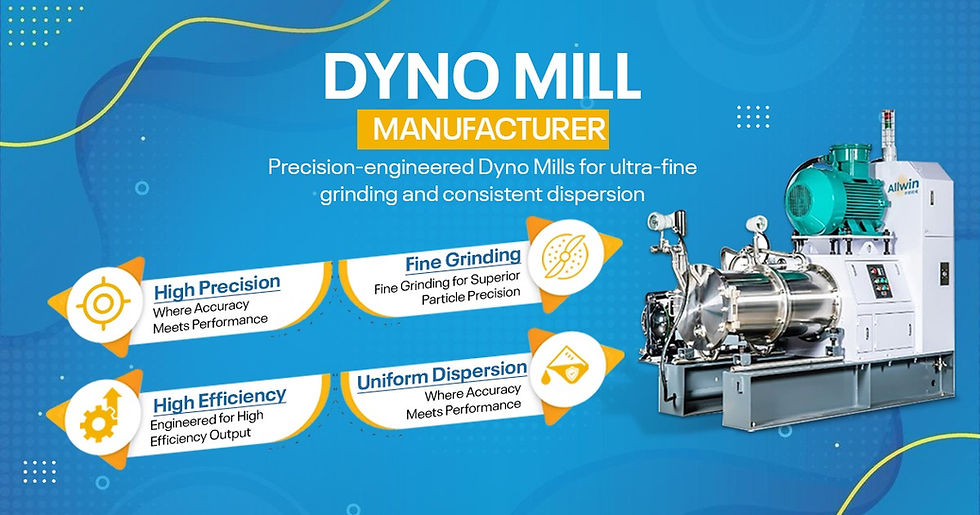
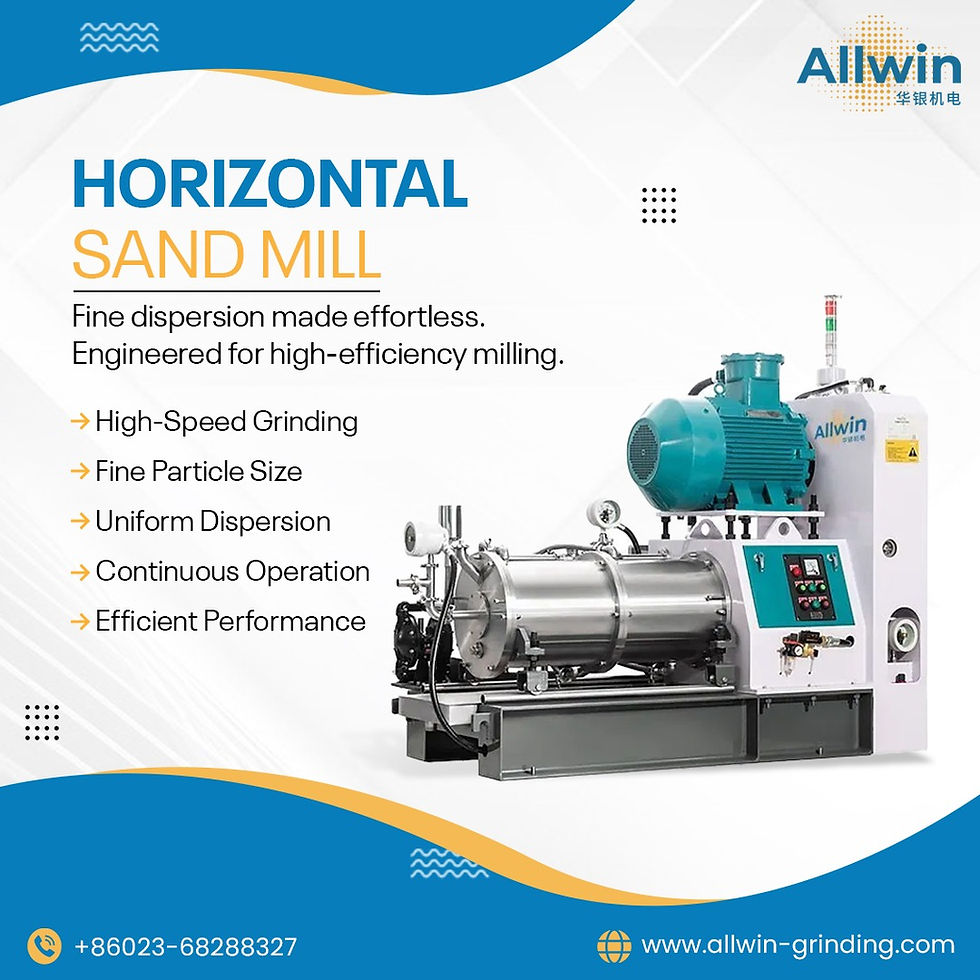
If you are in manufacturing, chemical or pharmaceutical industries, you’ve probably realised that it is difficult to get the consistency and texture of a product “perfect.” To do this; there are three major components and/or types of equipment used during production — Wet Grinding Equipment, Laboratory Bead Mills, and a Quality Industrial Agitator Tank Manufacturer.
In this article we will explain all of these items for their function in the production process as simply as possible.
Wet Grinding Equipment Has the Power to Grind
Think about it: you want to take a handful of rocks and turn them into powder. When you do it dry, you'll create a huge cloud of dust, and the friction will create a lot of heat. But, if you take those rocks and immerse them in water, then start hammering the rocks together, you'll end up creating a smooth, clean, controlled process.
Wet grinding equipment uses this same principle. In industrial manufacturing, manufacturers often need to take solid substances like pigments for paint or active ingredients for medicine and grind them down to a micro level.
Wet grinding equipment does this by mixing solids with a liquid base (e.g., water or a solvent) and applying mechanical forces to break up the solids into microscopic particles. So why would you do this wet?
Eliminate Dust: A wet environment makes it a safer workplace.
Control Temperature: By using water or another liquid to absorb the heat generated by friction on the materials, you will not destroy any delicate ingredients.
Achieve Ultra-Fine Results: This equipment allows a manufacturer to produce materials with particles that are as small as nano-sizes, resulting in much smoother and higher-quality final products.
From agricultural chemicals to cosmetics to food products, wet grinding provides the most reliable method of producing the smoothest finish possible.
Laboratory Bead Mills Perfect the Recipe before Producing 10,000 Gallons of New Lotion or Paint
In order to create an effective product, manufacturers must ensure that their production recipe has been fine-tuned. Just as one tests the batter for a wedding cake prior to baking, manufacturers conduct this same testing phase in a laboratory before beginning production.
Laboratory Bead Mills are used for this type of testing.
The Bead Mill is a grinding machine used to grind a product to a specific particle size. The Bead Mill consists of a chamber filled with small (typically glass, ceramic or steel) beads. When liquid product is pumped into the bead mill chamber, the beads are agitated by a spinning shaft. This creates friction between the beads which produces collisions between the beads, resulting in the beads trapping the solid materials between them and crushing them into very small particles.
Laboratory Bead Mills are small versions of the very large production machines used in factories. Laboratory Bead Mills play an important role in Research and Development (R&D) of new products.
Using Laboratory Bead Mills allows scientists and engineers to:
Perform new production formulations using small quantities of expensive raw materials
Determine the proper grinding time and speed necessary to produce a specific particle size
Scale up the process once a production formula has been established and know the results will be consistent
will be able to find an industrial agitator tank manufacturer that meets your exact specifications and requirements through collaboration with the manufacturer. You won't have to go through any additional expense or hassle when selecting an industrial agitator tank because the manufacturer has already created your custom-designed tank for you.
Your manufacturer's expertise can help you choose the right impeller for your application as well as the right materials for your tank's construction.
A feature that many customers are looking for in an industrial agitator tank is temperature control. You want to ensure that the mixture is kept at an appropriate temperature during the agitation process and your industrial agitator tank manufacturer will have the ability to help you determine the heating/cooling jacket options that will best suit your specific needs.
The Ultimate Trio for Business Success
You'll see success happen when all three of these things happen together in perfect sync at any rather successful manufacturing factory.
Chemists in the laboratory create the new formula using Laboratory Bead Mills, then send the recipe to the factory floor; raw materials are placed in an Internet-connected, very large custom-built industrial mixing tank manufactured by one of the largest Industrial Agitator Tank Manufacturers in North America to blend all the components together before being pumped through industrial, heavy-duty Wet Grinding Equipment which crushes each of the component pieces into a uniform, high-quality end product that is 100% free of any texture.
Manufacturers are able to produce smoother, more consistent and higher-quality products than we would expect, simply because they have invested in high-quality industrial machinery, and are now able to take advantage of all of the technology associated with modern-day machinery to create smooth, consistent and dependable products that we use to make our lives better every day!

Hi